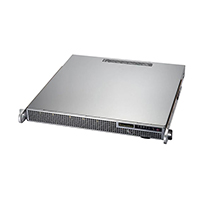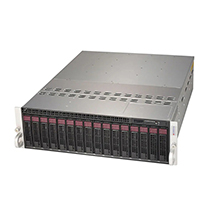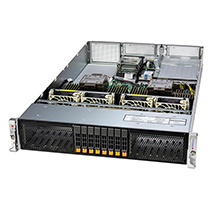










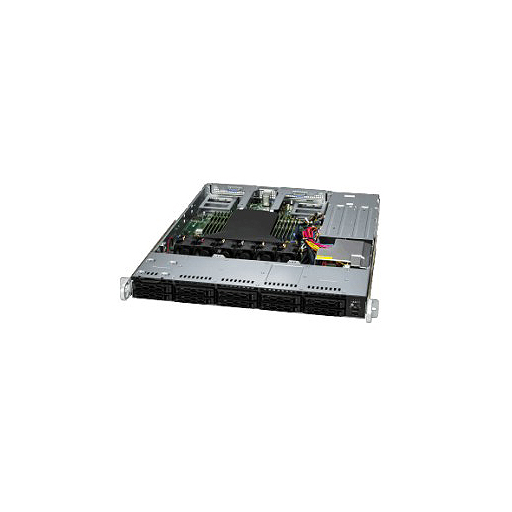

The Supermicro AS-1115CS-TNR-01-G2 CloudDC A+ Server is built for dense compute environments where memory bandwidth, storage flexibility, and high-speed connectivity come together in a compact 1U footprint. It brings together AMD EPYC processing power with DDR5 memory performance and PCIe Gen5 expansion, making it suitable for modern cloud infrastructure and data-heavy workloads that require consistent throughput and scalable design.
Key Features of Supermicro AS-1115CS-TNR-01-G2
Single AMD EPYC 9004/9005 series processor support
Up to 384GB DDR5-6400 ECC memory configuration
1U rackmount design for dense deployment environments
PCIe Gen5 expansion slots for high-speed add-on components
AIOM (OCP 3.0) networking expansion capability
Multiple hot-swap storage bay options (SATA/SAS/NVMe)
Dual 860W redundant power supply setup
Designed for continuous high-throughput workloads
Compute Architecture Built for High Density
This platform is based on a single AMD EPYC processor design, supporting high core counts and strong parallel processing capability. It is structured to handle virtualized workloads, distributed services, and processing-intensive tasks within a compact system layout.
High-Speed Memory Subsystem
Equipped with 384GB DDR5-6400 ECC memory, the system is designed to deliver fast data access and stable operation under continuous workloads. The DDR5 architecture supports higher bandwidth, which benefits caching, analytics pipelines, and memory-intensive applications.
Flexible Storage and Expansion Layout
The server supports multiple hot-swap drive bays with SATA, SAS, or NVMe options depending on configuration. It also includes PCIe Gen5 slots and AIOM networking expansion, allowing integration of high-speed adapters and additional compute or I/O components.
Power and System Stability
Dual 860W redundant power supplies provide continuous operation support with high efficiency. The system is designed for airflow-driven cooling in rack environments, maintaining stable thermal conditions during sustained workloads.
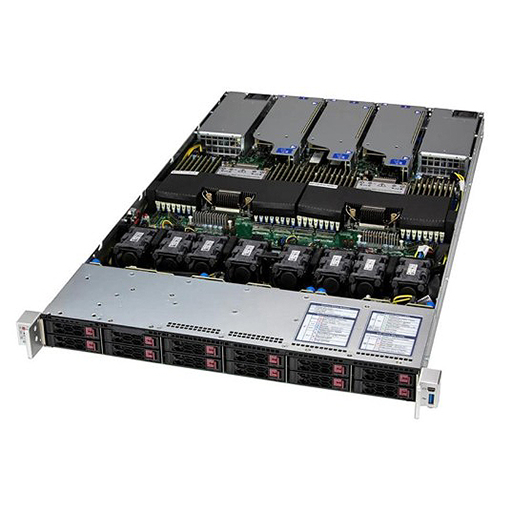
The SYS-122C-TN-01-G2 is a 1U CloudDC rack server built to support demanding workloads across cloud computing, virtualisation, high-performance computing, and large-scale data centre environments. Equipped with dual Intel Xeon processors, 1TB of DDR5-6400 ECC memory, high-speed NVMe storage, and dual 25GbE networking, it delivers substantial processing capability in a compact rackmount form factor. PCIe 5.0 expansion, remote management, and redundant Titanium-level power supplies provide the flexibility and reliability required for continuous operation.
Key Features of Kingston SYS-122C-TN-01-G2
1U CloudDC rackmount server
Dual Intel Xeon 6736P processors
1TB DDR5-6400 ECC RDIMM memory
2 × 3.8TB U.2 NVMe SSDs pre-installed
12 front hot-swap 2.5-inch NVMe/SAS/SATA drive bays
Dual-port 25GbE SFP28 network adapter
PCIe 5.0 expansion support
2 × M.2 PCIe 5.0 NVMe boot slots
Dual 1000W Titanium-level redundant power supplies
High-performance counter-rotating cooling fans
High-Density Compute Platform
With dual Intel Xeon processors and 1TB of DDR5 memory, the server is capable of handling compute-intensive applications while maintaining the compact footprint of a 1U rackmount system. It is well suited for virtual machines, cloud services, and data processing workloads.
Fast Storage and Expansion
Pre-installed U.2 NVMe solid-state drives provide high-speed data access, while twelve front hot-swap drive bays allow storage capacity to grow as requirements change. PCIe 5.0 expansion slots support additional networking, storage, or accelerator cards.
Advanced Connectivity
The included dual-port 25GbE SFP28 adapter delivers high-bandwidth network connectivity for demanding workloads, while dedicated OpenBMC management enables administrators to monitor and manage the server remotely.
Built for Continuous Operation
Dual Titanium-level redundant power supplies and an efficient cooling system help maintain reliable operation in busy server environments. The rackmount format makes it suitable for modern data centres where performance and space efficiency are equally important.