
Powering Your Network: Why HPE Aruba Networking Switches Stand Out
Choosing the right infrastructure backbone is crucial. HPE Aruba Networking consistently ranks among the top choices for businesses looking to future-proof their operations.
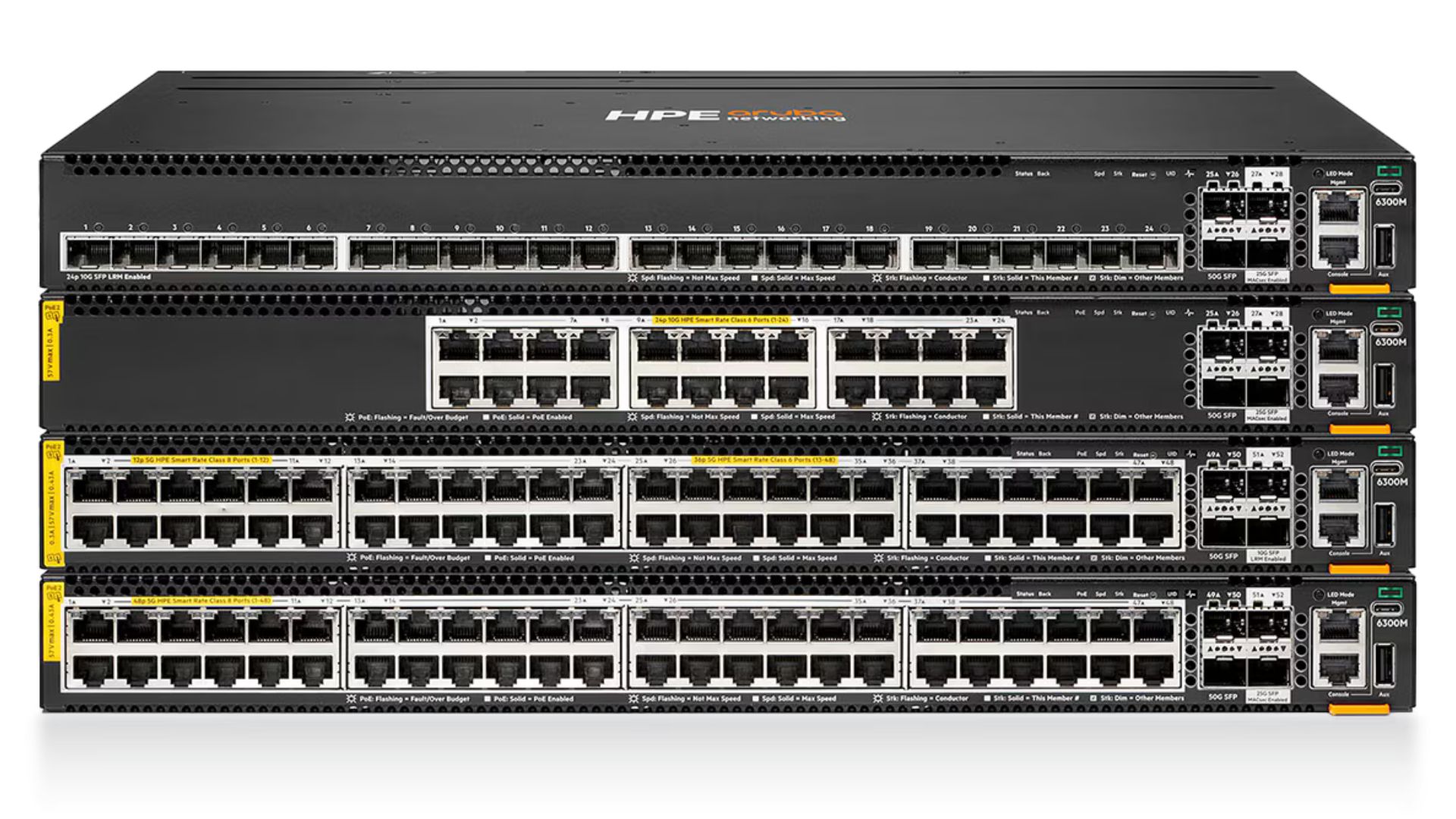
What Makes HPE Aruba Networking Switches So Good?
Consistency: Most modern Aruba switches run on a single, programmable operating system (AOS-CX).
Built-in Analytics and Automation: Equipped with features like the Network Analytics Engine (NAE), these switches offer real-time diagnostics and self-healing capabilities, catching network bottlenecks before they impact users.
Zero Trust Security: Aruba integrates robust security foundations—such as a Trusted Platform Module (TPM), automated role-based access control, and dynamic segmentation—keeping IoT and unauthorized devices securely quarantined.
Flexible Management: Whether you prefer a traditional Command Line Interface (CLI), an intuitive Web GUI, or cloud-native management through Aruba Central, managing your fleet is seamless.
Breaking Down the Switch Series
Aruba offers a diverse portfolio tailored to different environments, network sizes, and performance needs. Here is a look at the specific series available on Comms Express:
1. HPE Aruba Networking CX 6000 Series.
What they are: Entry-level, fixed-configuration Layer 2 gigabit switches.
What they are specifically good for: Small-to-medium-sized businesses (SMBs) and branch offices looking for cost-effective, reliable wired access. Many models feature fanless designs, making them ideal for quiet, space-constrained workspaces where basic PoE (Power over Ethernet) for IP phones or security cameras is needed.
2. HPE Aruba Networking CX 6100 Series
What they are: Enterprise-class Layer 2 access switches featuring robust security and high-speed uplinks.
What they are specifically good for: Businesses that need reliable 1G access connectivity backed by 10G fiber uplinks. They bridge the gap for growing offices that require enterprise-grade reliability without paying for advanced Layer 3 routing features they don’t yet use.
3. HPE Aruba Networking CX 6200 Series
What they are: Stackable Layer 3 access switches that bring advanced control closer to the network edge.
What they are specifically good for: Mid-to-large enterprise campus networks that require flexible stacking (combining multiple switches to act as one), built-in analytics, and intelligent monitoring to support heavy user mobility and device growth.
4. HPE Aruba Networking CX 6300 Series
What they are: High-performance Layer 3 stackable access and aggregation switches.
What they are specifically good for: High-density environments. They support Multi-Gigabit Ethernet (Smart Rate) and High-Power PoE, making them the go-to choice for powering modern Wi-Fi 6/7 access points, heavy IoT densities, and enterprise core-to-edge connections.
5. HPE Aruba Networking 2930 Series (2930F / 2930M)
What they are: Proven, reliable Layer 2/3 access switches equipped with flexible stacking and robust enterprise features.
What they are specifically good for: Campus networks and branch offices looking for a dependable workhorse. The 2930M series, in particular, offers modular stacking and field-replaceable power supplies, making it a staple for educational institutions and corporate offices wanting hardware resilience.
6. HPE Aruba Networking 5400R / 5406 / 5412 Series
What they are: Modular chassis-based Layer 2/3 switches (available in 6-slot and 12-slot configurations).
What they are specifically good for: Enterprise core and aggregation layers where maximum uptime, high availability, and massive port scalability are mandatory. Their modular design allows IT teams to hot-swap line cards and power supplies as the network scales.
Check out the HPE Aruba Networking Switch Range at Comms Express today!