
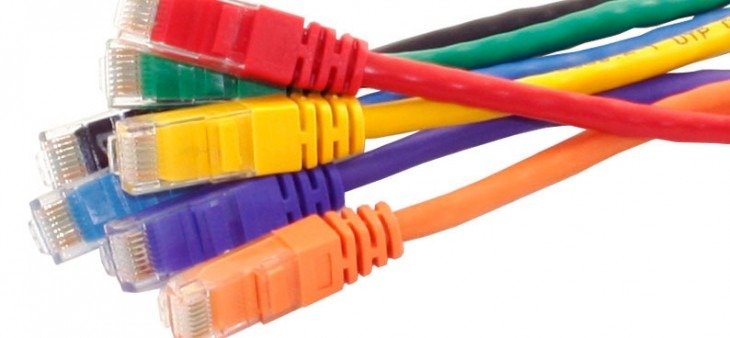
What is CAT5e Cable? – Shop Cat5e Cable
CAT5e (Category 5 Enhanced) represents a significant advancement in network cable technology, officially ratified in 1999. This enhanced cable type delivers substantial improvements over legacy CAT5, including speeds up to 10 times faster and superior crosstalk resistance.
CAT5e cables feature precision-engineered 24-gauge twisted pair wire construction, designed to support Gigabit Ethernet networks at distances up to 100 meters while maintaining optimal signal integrity.
Key CAT5e Features:
- Maximum speed: 1000 Mbps (1 Gigabit)
- Maximum distance: 100 meters
- Wire gauge: 24 AWG
- Bandwidth: 100 MHz
- Cost: Budget-friendly solution
What is CAT6 Cable? Shop Cat6 Cable
CAT6 (Category 6) represents next-generation Ethernet cable technology, standardized in 2002. This advanced specification offers exceptional performance improvements over CAT5e, featuring double the bandwidth capacity and significantly enhanced noise reduction capabilities.
CAT6 cables utilize robust 23-gauge twisted pair construction with advanced shielding, enabling 10 Gigabit Ethernet transmission at distances up to 55 meters while delivering superior signal quality.
Key CAT6 Features:
- Maximum speed: 10,000 Mbps (10 Gigabit)
- Maximum distance: 100m (1 Gbps), 55m (10 Gbps)
- Wire gauge: 23 AWG
- Bandwidth: 250 MHz
- Performance: Superior interference protection
CAT5e vs CAT6: Detailed Performance Comparison
| Feature | CAT5e | CAT6 |
|---|---|---|
| Maximum Speed | 1 Gbps | 10 Gbps |
| Bandwidth | 100 MHz | 250 MHz |
| Maximum Distance | 100 meters | 100m (1 Gbps), 55m (10 Gbps) |
| Wire Gauge | 24 AWG | 23 AWG |
| Crosstalk Protection | Good | Excellent |
| Cost Comparison | Budget-friendly | Higher investment |
| Future-Proofing | Standard applications | Advanced applications |
The fundamental differences between CAT5e and CAT6 Ethernet cables center on bandwidth capacity, signal integrity, and advanced noise reduction technologies. While both cable types excellently support Gigabit Ethernet applications, CAT6 provides double the bandwidth capacity, making it the preferred choice for high-demand applications requiring superior data transfer rates.
Network Speed Performance Analysis
CAT5e Cable Performance
Understanding CAT5e cable speed capabilities is essential for high-performance networking implementations. Category 5 enhanced cables reliably deliver Gigabit Ethernet speeds of up to 1000 Mbps, providing excellent performance for most standard networking applications.
Connected networking equipment, including enterprise network switches, routers, and modems, must also support these data transmission speeds to achieve optimal network performance and maintain consistent connectivity across your infrastructure.
Distance Impact on Performance
Cable length plays a crucial role in achieving optimal performance. The industry standard maximum cable length for all categories remains 100 meters, though CAT6 cables can only achieve their full 10 Gbps potential when limited to 55-meter segments.
When evaluating CAT5e and CAT6 speed performance, cable length considerations can be equally important as the category specification itself. With escalating bandwidth demands from modern applications, CAT6 network infrastructure proves more effective for future-ready installations.
Advanced Insulation Technology and Performance Enhancement
CAT6 cables represent the optimal choice for high-end networking applications due to significantly improved insulation technology that effectively reduces crosstalk interference compared to CAT5 and CAT5e alternatives. Crosstalk refers to electromagnetic interference between adjacent cables, where overlapping signals can degrade performance.
In earlier CAT5 and CAT5e installations, electromagnetic interference is more likely to result in degraded user experience, including connection instability and reduced throughput. CAT6’s advanced shielding and improved wire separation techniques virtually eliminate these performance issues, ensuring consistent high-speed data transmission.
Which Ethernet Cable Should You Choose?
Choose CAT5e if:
- Budget is a primary concern
- 1 Gigabit speeds meet your current needs
- Upgrading existing infrastructure gradually
- Standard office networking requirements
- Short to medium-term deployment plans
Choose CAT6 if:
- Future-proofing your network investment
- 10 Gigabit speeds are required or anticipated
- High-interference environments
- Mission-critical applications
- Data center or server room installations
- Long-term infrastructure planning
Selecting between CAT5e and CAT6 Ethernet cables ultimately depends on your specific networking requirements, performance expectations, and budget considerations. If your applications demand higher bandwidth capacity, future-proof infrastructure, and enhanced noise reduction capabilities, CAT6 represents the superior investment choice.
However, if your current networking needs are satisfied with Gigabit Ethernet performance and you’re operating within budget constraints, CAT5e provides an excellent practical solution that delivers reliable performance at a competitive price point.
Expert Conclusion and Recommendations
Understanding the technical differences between CAT5e and CAT6 Ethernet cables is fundamental when selecting the optimal networking solution for your specific infrastructure requirements. By investing time in thorough research and detailed comparison of these cable technologies, you can make an informed decision that ensures your Ethernet network operates at peak performance levels.
The choice between CAT5e and CAT6 should align with your current networking needs, future expansion plans, and available budget. Both cable types offer distinct advantages, and the right choice depends on balancing performance requirements with cost considerations for your specific networking environment.
Ready to Upgrade Your Network Infrastructure?
Once you’ve identified the optimal cabling solution for your next networking project, explore our comprehensive cable selection to find the perfect match for your requirements.
Shop High-Performance Ethernet Cables
Whether you are upgrading to Gigabit speeds with Cat5e or future-proofing with Cat6, we stock a complete range of networking cables and hardware.
- Cat6 Solutions (Recommended)
- Buy Cat6 Bulk Cable
- Shop Cat6 Patch Leads
- Buy Cat6 Patch Panels
- Cat5e Solutions
- Shop Cat5e Bulk Cable
- Buy Cat5e Patch Leads
- Shop Cat5e Patch Panels
- Termination Essentials
- Buy RJ45 Connectors
- Shop Networking Tools
- Buy Network Wall Plates
Still unsure which cable you need? Choosing between Cat5e and Cat6 depends on your distance and interference requirements. Speak to our cabling experts for a recommendation tailored to your installation.
Until next time…
