
Professional Guide to RJ45 Connectors: Standards, Wiring, and Best Practices
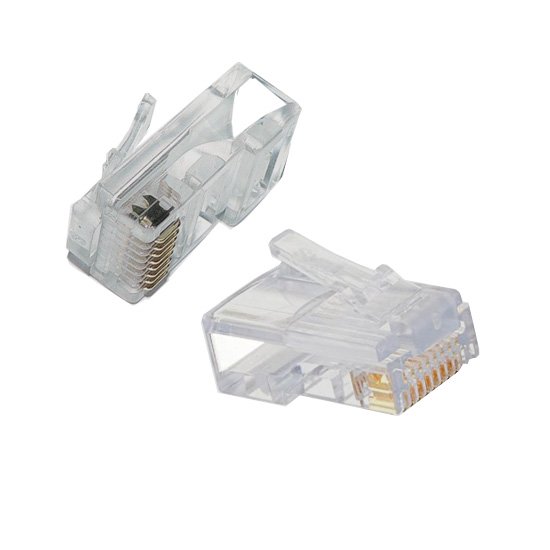
In the world of networking, the RJ45 connector is the unsung hero of connectivity. Whether you are wiring a home office or a sprawling enterprise data center, understanding the mechanics, wiring standards, and physical specifications of the 8-pin modular connector is vital for a stable, high-speed network.
What is an RJ45 Connector? (The 8P8C Interface)
- The RJ45 is the universal physical interface for Ethernet networking.
- The term RJ45 stands for “Registered Jack-45.” While technically a wiring specification, the name has become synonymous with the 8P8C (8 Position, 8 Contact) modular connector.
- Originally designed for telephone systems, the 8-pin RJ45 interface is now the backbone of local area networks (LANs), connecting everything from workstations to enterprise switches.
RJ45 Wiring Standards: T568A vs. T568B
- The specific sequence of the eight coloured wires determines how data is sent and received.
- To ensure a “straight-through” connection, you must use the same wiring standard at both ends of the cable. Mixing them results in a “crossover” configuration, which is rarely needed in modern networks.
- T568B (The Industry Standard): This is the most common wiring scheme in the UK and commercial sectors. It offers excellent compatibility with modern business infrastructure.
- T568A (The Legacy Standard): Often found in older residential installations or specific government projects.
- Crossover Leads: These use T568A on one end and T568B on the other to connect two similar devices (like two PCs) directly without a switch.

Anatomy of an Ethernet Patch Lead
- A high-quality RJ45 cable is more than just wire; it’s a precision-engineered tool for signal integrity.
- Most Ethernet patch leads are terminated with RJ45 plugs and utilize four pairs of twisted copper wires (eight wires total).
- Key Features to Look For:
- Booted vs. Unbooted: Booted leads feature a plastic “snagless” cover over the release clip, preventing breakage. Unbooted leads are preferred in high-density patching environments where space is at a premium.
- UTP vs. STP: Unshielded (UTP) is standard for offices. Shielded (STP) connectors are required in environments with high electromagnetic interference (EMI).
- Category Rating: Ensure your connector matches your cable category (Cat5e, Cat6, or Cat6a) to avoid performance bottlenecks.
Installation and Professional Accessories
- Professional-grade termination requires the right tools and modular components.
- For site engineers, the job doesn’t end at the cable. High-density environments often utilize LJ6C Modules—a UK-standard 21x37mm module, to mount RJ45 jacks into floor boxes or wall faceplates.
- Essential Tooling:
- Crimp Tools: For creating a secure, “gas-tight” connection between the wire and the pins.
- Locking Devices: Used in public areas to prevent unauthorized removal of critical network links.
An Overview of RJ45 Connectors
The eight-pin RJ45 connector is a standardised interface which often connects a computer to a Local Area Network (LAN). This type of connector was originally developed for telephone communications but is now used in a range of applications. The abbreviation, RJ45, stands for Registered Jack-45. Registered Jack specifications are related to the wiring patterns of the jacks, rather than their physical characteristics. The term RJ45 has also come to refer to a range of connectors for Ethernet jacks. An 8 Position/8 Contact connector, called an 8P8C, is a modular connector for telecommunication cables. It is also informally referred to as an RJ45.
Buy RJ45 Connectors
RJ45 Cable for Ethernet Connections
Ethernet cables come with RJ45 connectors on both ends. Because of this, an Ethernet cable is sometimes designated as an RJ45 cable. These cables are often used to connect computers onto Ethernet networks. The RJ45 connector resembles a six-pin RJ11 connector, though the 45 is slightly wider. Since each connector has eight pins, an RJ45 Ethernet cable will have eight wires of varying colours. RJ45 cables can be wired according to two different schemes, T-568 A or B, depending upon the devices to be connected within the network. Crossover patch cables have different wiring schemes on each end to support computer-to-computer connections.
Buy RJ45 Ethernet Cables
Top 5 Frequently Asked Questions: RJ45 Connectors
1. What is the difference between RJ45 and 8P8C?
While the terms are used interchangeably in the industry, there is a technical distinction. 8P8C (8 Position, 8 Contact) refers to the physical modular connector—the plastic housing and metal pins. RJ45 (Registered Jack-45) refers to the specific wiring standard and signal pattern used for Ethernet. In short: 8P8C is the hardware; RJ45 is the configuration.
2. Can I use a Cat6 RJ45 connector on a Cat5e cable?
Yes, RJ45 connectors are backward compatible. However, you must ensure the wire gauge (AWG) is compatible. Cat6 cables typically have thicker copper conductors (23AWG) and a thicker outer jacket than Cat5e (24AWG). Using a Cat5e-specific connector on a Cat6 cable may be difficult to crimp, while a Cat6 connector on Cat5e wire may result in a loose, unreliable connection.
3. Why is my network stuck at 100Mbps instead of 1Gbps?
This is often caused by a faulty RJ45 termination. Gigabit Ethernet (1000Mbps) requires all eight wires (four pairs) to be perfectly connected. If even one wire is improperly crimped or broken, the network will automatically “negotiate” down to Fast Ethernet (100Mbps), which only requires four wires to operate.
4. Which is better: T568A or T568B wiring?
Neither is technically “better” in terms of speed or quality, but T568B is the widely accepted commercial standard in the UK and North America. The most important rule is consistency: you must use the same standard at both ends of a cable. Mixing T568A and T568B on a single lead creates a “crossover cable,” which can cause connectivity issues in modern “auto-MDIX” hardware.
5. What is a “Snagless” or “Booted” RJ45 connector?
A snagless/booted connector features a moulded plastic cover (the “boot”) over the release tab. This prevents the small plastic clip from snagging on other cables and snapping off when being pulled through tight spaces or dense server racks. Unbooted connectors are used in ultra-high-density environments where space between ports is extremely limited.

RJ45 Cat5e & Cat6 Connectors & Adapters have been manufactured to high quality specifications and are cheaply priced so that networking costs are kept to a minimum. We also offer other Ethernet and UTP cable components. These items include RJ45 Crimp Plugs & Boots, RJ45 Patch Lead Locking Devices, Accessories and UTP Shuttered Modules available in LJ6C Sizing.
Get Expert Technical Advice
Still unsure which specification suits your project? The experts at Comms Express are available to provide bespoke recommendations for residential, commercial, or industrial deployments.
Next Step: Browse our full range of RJ45 Ethernet Cables or contact our team for a bulk-buy quote today.
Shop the Full Range at Comms Express
Browse the UK’s most trusted brands and high-performance infrastructure solutions.
- Cabling & Racks
- Buy Network Cables
- Shop RJ45 Patch Leads
- Buy Patch Panels
- Shop Cat6 Cable
- Buy Fibre Patch Leads
- Shop Server Racks
- Buy Data Cabinets
- Networking & Power
- Shop Network Switches
- Buy UPS Systems
- Shop Rack PDUs
- Buy IP CCTV & Cameras
- Offers & Savings
- Shop Discounts
- Buy Multi-Buy Offers
- Our Top Brands
- Shop Ubiquiti | Buy TP-Link
- Shop Cisco | Buy Netgear
- Shop DrayTek | Buy D-Link
- Shop HPE Aruba | Buy APC
- Shop Teltonika | Buy Eaton
- Shop Excel | Buy Lindy
- Own Brands
- Shop Datacel | Buy CE Networking
Project Planning? Get expert technical advice and custom quotes for large installations. Contact our expert sales team today.