
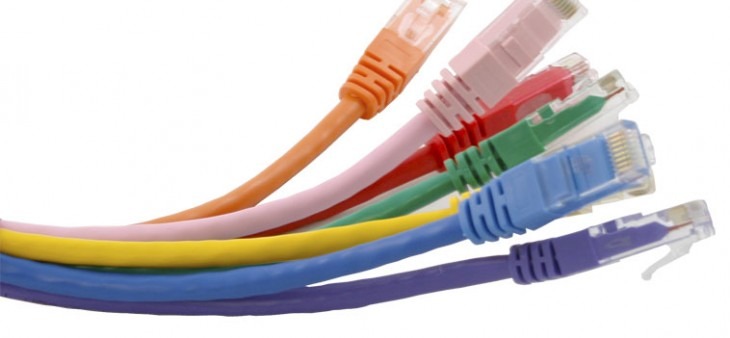
Key Takeaway: Network cable interference is the disruption of electrical signals caused by external electromagnetic sources (EMI) or internal signal leakage (Crosstalk).
- Primary Result: Interference leads to dropped data packets, increased latency, and reduced transmission speeds.
- Main Solution: Transitioning from Cat5e to Cat6 or Cat6a cabling, which features tighter wire twists and internal physical separators (splines).
- Best Practice: Maintain physical separation between data and power lines to minimize induction noise.
What are the primary types of network signal disruption?
- Signal disruption in copper cabling is categorised by its source – either external environmental “noise” or internal signal bleeding.
- Understanding the specific type of interference is necessary for selecting the correct cable grade (UTP vs. STP).
- Electromagnetic Interference (EMI): Noise from external sources like fluorescent lighting, power lines, or heavy machinery.
- Crosstalk: Signal “bleed” between wire pairs within the same jacket.
- Alien Crosstalk (AXT): Interference between adjacent cables in a tight bundle; a significant factor in high-density 10Gbps environments.
Cat5e vs. Cat6 vs. Cat6a: Which standard handles noise best?
- Ethernet standards (Category ratings) define the cable’s ability to reject interference through physical construction.
- Higher categories utilize improved insulation and geometry to support higher frequencies without signal degradation.
- Comparison Table:
| Cable Type | Frequency | Noise Management | Best Use Case |
| Cat5e | 100 MHz | Basic internal crosstalk reduction. | General office / Home networking. |
| Cat6 | 250 MHz | Integrated spline (separator) to reduce crosstalk. | Standard for Gigabit Ethernet. |
| Cat6a | 500 MHz | Advanced shielding/insulation for Alien Crosstalk. | 10GBASE-T / High-EMI environments. |
Three deployment strategies to reduce cable interference
- Proper installation techniques are as critical as the cable category in maintaining signal integrity.
- Physical stressors and poor pathing can negate the benefits of high-category cabling.
- The Framework:
- Shielded Twisted Pair (STP): Use foil-shielded cables in industrial areas to create a physical barrier against high-voltage EMI.
- 90-Degree Pathing: Never run data cables parallel to power lines. If a crossing is required, it must be at a 90-degree angle to minimize noise induction.
- Avoid Over-Tightening: Use hook-and-loop fasteners instead of plastic zip ties. Crushing the cable jacket damages the internal twists, increasing vulnerability to crosstalk.
UTP vs. STP: Choosing the Right Shielding for Your Network
When selecting between Unshielded Twisted Pair (UTP) and Shielded Twisted Pair (STP), the decision depends entirely on your environment’s Electromagnetic Interference (EMI) levels.
| Feature | UTP (Unshielded Twisted Pair) | STP (Shielded Twisted Pair) |
| Construction | Pairs are twisted together with no additional internal shielding. | Pairs are wrapped in metallic foil or braided mesh shielding. |
| EMI Protection | Minimal; relies solely on wire twists to cancel out noise. | High; the shield acts as a Faraday cage to block external noise. |
| Installation | Easy; thinner, more flexible, and requires no grounding. | Complex; thicker, stiffer, and requires shielded connectors and grounding. |
| Cost | Budget-friendly; the standard for most commercial builds. | Premium; higher material costs for the cable and specialized hardware. |
| Best Use Case | Standard offices, homes, and temperature-controlled server rooms. | Factories, areas near lift motors/fluorescent lights, and outdoor runs. |
The Impact of Attenuation
While interference is an external force, attenuation is the resulting loss of signal strength over distance. In environments with high EMI, attenuation happens faster, effectively shortening the reliable length of your cable run. For mission-critical 10Gbps runs, Cat6a isn’t just a “speed” choice; it’s a reliability choice that ensures the signal arrives with enough strength to be read by the receiving switch without errors.
Network Cable Routing Best Practices

Frequently Asked Questions (FAQ)
What is the most common cause of network interference? The most common causes are Electromagnetic Interference (EMI) from external power sources and Crosstalk, where signals bleed between wire pairs within the cable.
Does Cat6a reduce interference better than Cat6? Yes. Cat6a is specifically designed with improved insulation and tighter twists to mitigate Alien Crosstalk (AXT), making it the standard for 10Gbps networks in high-density areas.
Can power cables interfere with Ethernet cables? Yes. Running data cables parallel to electrical power lines can induce noise into the data signal. To prevent this, always maintain physical separation or ensure they cross at a 90-degree angle.
Shop Network Cable Interference Solutions
Quick-access links to high-performance cabling and interference management tools.
High-Performance Copper Cabling
- Shop Category 6a (Cat6a) Cable – Maximum 10Gbps performance and advanced Alien Crosstalk (AXT) protection.
- Shop Category 6 (Cat6) Cable – Reliable Gigabit connectivity with internal spline for reduced crosstalk.
- Shop Shielded Twisted Pair (STP) Patch Leads – Essential foil-shielded protection for high-EMI industrial environments.
Cable Management & Routing
- Hook-and-Loop (Velcro) Fasteners – Prevent cable crush and maintain internal twist geometry.
- Cable Trays & Management – Maintain proper bend radii and organisation within server racks.
- Shielded Patch Panels – Required for proper grounding of STP cabling networks.