
Key Takeaway: Bend Radius is the minimum curve a cable can handle without damaging its internal structure or degrading the signal.
Maintaining the integrity of your network requires more than just high-quality hardware; it demands precise installation. Cable bend radius is the critical threshold, the minimum curve a cable can sustain, before you risk permanent structural damage or significant signal degradation. Failing to adhere to these specifications often leads to intermittent connectivity issues that are difficult to troubleshoot.
Critical Bend Radius Standards
To ensure optimal performance and long-term reliability, follow these industry-standard calculations:
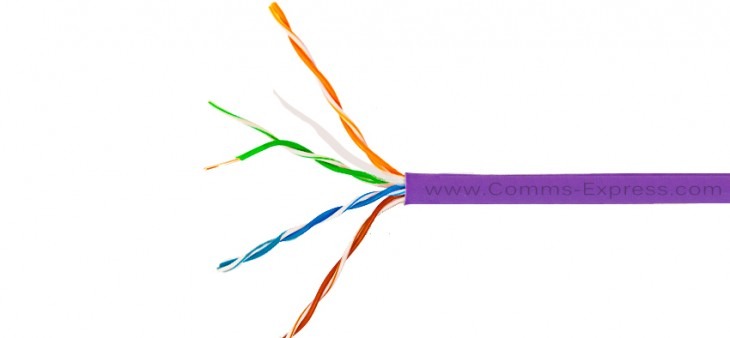
- Copper Ethernet (Cat5e/Cat6/Cat6a): The standard rule of thumb is 4x the outer diameter of the cable. For shielded cables or thicker jackets, always consult the manufacturer’s datasheet to prevent internal copper fatigue.
- Fiber Optic Cabling: Requirements vary based on the state of the cable:
- Static (Installed): Generally 10x the diameter.
- Dynamic (Under Pulling Tension): Typically 20x the diameter to account for the added stress during the pull.
The Consequences of Improper Bending
Ignoring these limits doesn’t just “kink” the wire; it fundamentally alters the transmission path. Exceeding the bend radius can result in:
- Attenuation: Significant signal loss where the power of the data stream weakens.
- Near-End Crosstalk (NEXT): Signal interference between wire pairs in copper cabling.
- Core Fractures: Microscopic, permanent cracks in fiber glass cores that necessitate a full cable replacement.
How do you calculate the minimum bend radius?
- The minimum bend radius is the smallest radius a cable can be bent around before performance is compromised.
Cable Outer Diameter (OD) x Multiplier = Minimum Bend Radius.- The Framework (Standard Multipliers):
| Cable Type | Multiplier (Static/Installed) | Multiplier (Dynamic/Pulling) |
| Cat5e / Cat6 (UTP) | 4x OD | 4x OD |
| Cat6a (Shielded) | 8x OD | 8x OD |
| Fiber Optic (Single/Multimode) | 10x OD | 20x OD |
| Telephone (Multi-pair) | 10x OD | 10x OD |
Why is bend radius critical for network performance?
- Fiber Optics (Light Leakage): Bending fiber too tightly causes macro-bending loss, where light escapes through the cladding instead of reflecting down the core. In extreme cases, the glass fiber will snap.
- Copper Cables (Twist Integrity): Ethernet performance relies on the precise “twist” of internal copper pairs. Excessive bending stretches these twists, causing Crosstalk (NEXT), where signals “leak” between pairs, effectively dropping a 10Gbps link down to 100Mbps.
Frequently Asked Questions (FAQ)
What happens if I kink an Ethernet cable? A kink permanently damages the internal copper twists or the spline. Even if the cable is straightened, the performance will be permanently degraded, leading to packet loss and intermittent connection drops.
Is bend radius measured from the inside or outside? The bend radius is measured from the inside curve of the cable to the center of the bend.
Does a larger bend radius help performance? Yes. A “sweeping” bend is always better than a “minimum” bend. It reduces physical tension on the jacket and ensures the best possible signal integrity.