
The Importance of Low Smoke Zero Halogen Cables (LSZH Cables) in Modern Wiring
In the modern world, safety is a paramount concern, particularly in environments where fire hazards are a real threat. Traditionally, PVC (Polyvinyl Chloride) cables have been widely used in electrical installations due to their cost-effectiveness and flexibility. However, in the event of a fire, PVC cables can release dense smoke and toxic halogen gases such as chlorine, which can be deadly in confined spaces. This has led to the increasing adoption of Low Smoke Zero Halogen (LSZH) cables.
LSZH cables are designed to significantly reduce the amount of smoke and eliminate the release of halogen gases when exposed to high temperatures or fire. This is particularly important in public spaces such as hospitals, schools, and office buildings, where the presence of large numbers of people necessitates stringent safety measures. The use of LSZH cables can prevent the inhalation of harmful substances and improve visibility during evacuations, thus saving lives.
Moreover, as building codes and regulations become more stringent, the demand for LSZH cables is expected to rise. Governments and regulatory bodies around the world are increasingly mandating the use of LSZH cables in certain applications to ensure public safety. This trend highlights the growing recognition of the importance of LSZH cables in modern wiring installations.
Key Features of Low Smoke Zero Halogen Cables
LSZH cables are characterised by their unique material composition, which sets them apart from traditional cables. Unlike PVC cables, which contain chlorine and other halogenated compounds, LSZH cables are made from thermoplastic or thermoset compounds that do not release halogen gases when burned. This ensures that, in the event of a fire, the cables produce a minimal amount of smoke and do not emit toxic fumes.
Another important feature of LSZH cables is their flame retardancy. These cables are designed to resist combustion and prevent the spread of fire along the cable’s length. This is achieved through the use of flame-retardant additives in the cable’s insulation and jacket materials. As a result, LSZH cables can help contain fires and limit the damage to property and infrastructure.
Additionally, LSZH cables offer excellent mechanical and electrical properties. They are highly durable and can withstand harsh environmental conditions, making them suitable for both indoor and outdoor installations. Furthermore, LSZH cables provide reliable electrical performance, with low signal attenuation and good insulation resistance. This ensures that they can be used in a wide range of applications, from data centers and telecommunications networks to industrial automation systems.
Applications of LSZH Cables in Various Industries
The versatility and safety features of LSZH cables make them suitable for use in a wide range of industries. In the transportation sector, for example, LSZH cables are commonly used in the wiring systems of trains, airplanes, and ships. In these environments, the risk of fire is a serious concern, and the use of LSZH cables can help protect passengers and crew by reducing the release of toxic gases and improving visibility during evacuations.
In the construction industry, LSZH cables are often used in the wiring of commercial and residential buildings. This includes applications such as power distribution, lighting, and data communication. The use of LSZH cables in these settings can help ensure the safety of occupants and comply with building codes and regulations that mandate the use of low smoke and halogen-free materials.
The telecommunications industry is another major user of LSZH cables. In data centers and network installations, the need for reliable and safe cabling solutions is critical. LSZH cables provide the necessary performance and safety features to support high-speed data transmission and protect valuable equipment and data from fire-related damage.
Advantages of Using LSZH Cables Over Traditional Cables
One of the primary advantages of LSZH cables over traditional PVC cables is their enhanced safety profile. As previously mentioned, LSZH cables produce significantly less smoke and do not emit toxic halogen gases when burned. This can make a crucial difference in emergency situations, where visibility and air quality are essential for safe evacuation and rescue efforts. The use of LSZH cables can therefore reduce the risk of injury and fatalities in the event of a fire.
Another advantage of LSZH cables is their compliance with modern safety standards and regulations. Many countries have implemented stringent requirements for the use of low smoke and halogen-free materials in certain applications, particularly in public buildings and transportation systems. By using LSZH cables, organisations can ensure that they are in compliance with these regulations and avoid potential fines and legal liabilities.
In addition to their safety benefits, LSZH cables also offer excellent performance characteristics. They provide reliable electrical performance, with low signal attenuation and good insulation resistance. This makes them suitable for a wide range of applications, from power distribution and lighting to data communication and industrial automation. Furthermore, LSZH cables are highly durable and can withstand harsh environmental conditions, ensuring long-term reliability and reducing the need for frequent replacements.
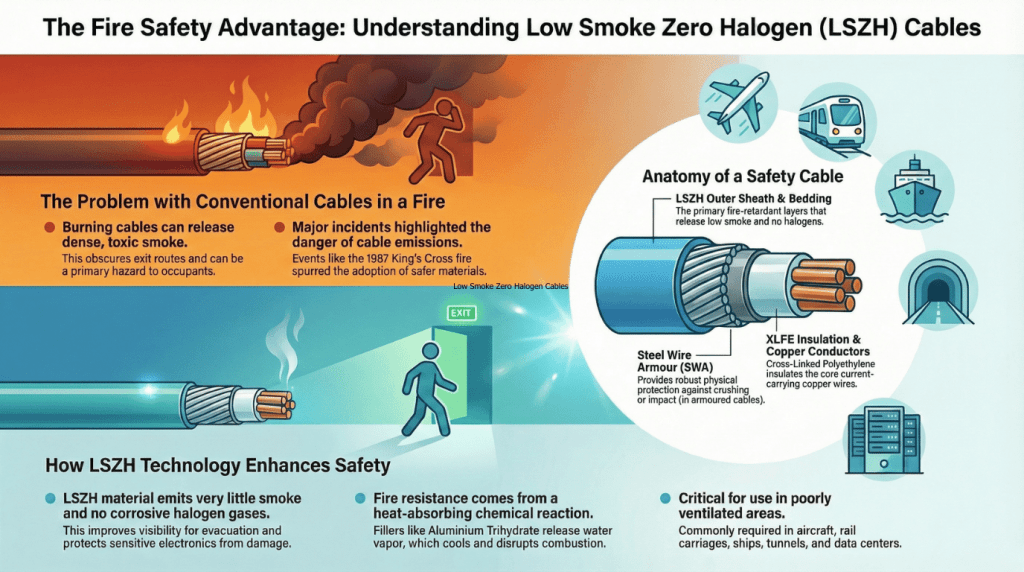
How LSZH Cables Improve Safety in Fire Situations
The primary way in which LSZH cables improve safety in fire situations is by reducing the amount of smoke produced. In the event of a fire, smoke can quickly fill a building, obscuring visibility and making it difficult for occupants to find their way to safety. The dense, black smoke produced by burning PVC cables can be particularly hazardous, as it can cause disorientation and panic. In contrast, LSZH cables produce a much lower volume of smoke, which is typically lighter in colour and less likely to impede visibility.
In addition to reducing smoke production, LSZH cables also eliminate the release of toxic halogen gases. When PVC cables burn, they release chlorine and other halogenated compounds, which can form harmful acids when combined with moisture in the air. These acids can cause severe respiratory irritation and damage to the lungs, posing a serious health risk to anyone exposed to the smoke. LSZH cables, on the other hand, do not contain halogens and therefore do not produce these toxic gases, making them much safer in the event of a fire.
Furthermore, LSZH cables are designed to resist combustion and prevent the spread of fire along their length. This is achieved through the use of flame-retardant additives in the cable’s insulation and jacket materials. By limiting the spread of fire, LSZH cables can help contain the blaze and reduce the overall damage to property and infrastructure. This can also provide valuable time for emergency responders to arrive and extinguish the fire, further enhancing safety.
Installation Best Practices for LSZH Cables
To ensure the optimal performance and safety of LSZH cables, it is important to follow best practices during installation. One key consideration is the proper handling and storage of the cables. LSZH cables should be stored in a cool, dry environment, away from direct sunlight and sources of heat. This will help prevent degradation of the cable materials and ensure that they maintain their flame-retardant properties.
During installation, it is important to follow the manufacturer’s guidelines and recommendations for cable routing and support. LSZH cables should be installed in a manner that minimises mechanical stress and avoids sharp bends, which can damage the cable and compromise its performance. Additionally, the use of proper cable management systems, such as cable trays and conduits, can help protect the cables and ensure a neat and organised installation.
Another important consideration is the termination and connection of LSZH cables. Proper termination techniques, such as the use of appropriate connectors and termination tools, are essential to ensure reliable electrical performance and prevent issues such as signal loss and interference. Additionally, it is important to ensure that all connections are secure and properly insulated to prevent short circuits and other electrical hazards.
Common Myths and Misconceptions About LSZH Cables
Despite the many benefits of LSZH cables, there are several common myths and misconceptions that can create confusion and hinder their adoption. One common misconception is that LSZH cables are always more expensive than traditional PVC cables. While it is true that LSZH cables can be more costly upfront, the long-term benefits in terms of safety, compliance, and reduced maintenance costs can outweigh the initial investment. Additionally, as demand for LSZH cables continues to grow, prices are expected to become more competitive.
Another myth is that LSZH cables are less durable and more prone to damage than PVC cables. In reality, LSZH cables are designed to be highly durable and can withstand harsh environmental conditions. They offer excellent mechanical and electrical properties, making them suitable for a wide range of applications. It is important to choose high-quality LSZH cables from reputable manufacturers to ensure reliable performance and longevity.
A third misconception is that LSZH cables are only necessary in high-risk environments, such as industrial settings or transportation systems. While it is true that LSZH cables are particularly beneficial in these environments, their safety features make them a valuable choice for any installation where fire safety is a concern. This includes residential and commercial buildings, data centers, and public spaces. By choosing LSZH cables, organisations can enhance the safety of their installations and protect the lives and well-being of occupants.
Regulatory Standards and Compliance for LSZH Cables
The use of LSZH cables is governed by a range of regulatory standards and compliance requirements, which vary by country and region. In the European Union, for example, the Construction Products Regulation (CPR) sets out requirements for the performance of construction products, including cables, in terms of their reaction to fire. LSZH cables must meet specific criteria for smoke production, flame spread, and the release of hazardous substances to be compliant with CPR requirements.
In the United States, the National Electrical Code (NEC) includes provisions for the use of LSZH cables in certain applications. For example, the NEC mandates the use of low-smoke, halogen-free cables in plenum spaces, which are areas used for air circulation in buildings. This is to ensure that, in the event of a fire, the cables do not contribute to the spread of smoke and toxic gases through the ventilation system.
Other countries have their own regulations and standards for the use of LSZH cables. In many cases, these standards are based on international guidelines, such as those developed by the International Electrotechnical Commission (IEC). The IEC publishes a range of standards for the performance and testing of cables, including requirements for flame retardancy, smoke production, and halogen content. Compliance with these standards is essential to ensure the safety and reliability of LSZH cables in various applications.
Conclusion and Future Trends in Cable Technology
The adoption of Low Smoke Zero Halogen cables is a critical step towards enhancing fire safety in a wide range of environments. Their unique material composition and performance characteristics provide significant advantages over traditional PVC cables, including reduced smoke production, elimination of toxic halogen gases, and improved flame retardancy. These features make LSZH cables a valuable choice for any installation where safety is a priority.
Looking to the future, the development of new materials and technologies is expected to further enhance the performance and safety of LSZH cables. Advances in flame-retardant additives and insulation materials could lead to even greater reductions in smoke production and improved resistance to fire. Additionally, the integration of smart technologies, such as sensors and monitoring systems, could provide real-time data on the condition of cables and help prevent potential fire hazards before they occur.
As building codes and regulations continue to evolve, the demand for LSZH cables is likely to increase. Organisations and manufacturers must stay informed about the latest standards and compliance requirements to ensure that their installations meet the highest safety standards. By choosing LSZH cables, they can protect lives, reduce the risk of fire-related damage, and contribute to a safer and more sustainable future.
In conclusion, Low Smoke Zero Halogen cables represent a significant advancement in cable technology, offering a safer and more reliable solution for modern wiring installations. Whether in transportation, construction, telecommunications, or any other industry, the use of LSZH cables can provide peace of mind and ensure the safety and well-being of occupants in the event of a fire. As technology continues to evolve, the future of LSZH cables looks bright, with ongoing innovations set to further enhance their performance and safety features.
Expert Verdict: Why LSZH is the Gold Standard for Modern Infrastructure
When designing network infrastructure, the choice between PVC (Polyvinyl Chloride) and LSZH (Low Smoke Zero Halogen) is no longer just a matter of cost – it is a critical safety and compliance decision.
The Core Advantage: Traditional PVC cables are effective for general use but pose a dual threat during a fire: they emit dense, black smoke that obscures escape routes and release toxic Hydrogen Chloride (HCl) gas. In contrast, LSZH cables are engineered with thermoplastic compounds that emit limited, thin white smoke and zero halogens. This ensures maximum visibility for evacuation and prevents the formation of corrosive acids that can destroy sensitive server equipment and harm human respiratory systems.
Strategic Recommendation: For data centers, high-rise commercial offices, and public spaces (like hospitals or airports), LSZH is the mandatory choice. While the initial investment may be 15–20% higher than PVC, the “hidden” ROI is found in reduced liability, adherence to BS EN 61034-2 and BS EN 60754-1 standards, and the protection of high-value hardware from corrosive soot.
Final Thought: If your installation is in a confined space with limited ventilation or high human density, LSZH isn’t just an upgrade – it’s a life-safety requirement.
Frequently Asked Questions (FAQ)
1. What is low smoke zero halogen cable?
Low Smoke Zero Halogen (LSZH) cable is a type of electrical or data cable designed to improve safety during a fire.
It is commonly used in IT networks, data centres, public buildings, and transport environments where fire safety is critical.
LSZH stands for Low Smoke Zero Halogen. It refers to a type of cable jacketing material that, when exposed to fire, produces very little smoke and contains no halogens (such as Chlorine or Fluorine), which are known to turn into toxic, corrosive gases when burned.
2. Is LSZH the same as LSOH or LSHF?
Yes. You will often see these terms used interchangeably. LSOH (Low Smoke Zero Halogen), LSHF (Low Smoke Halogen Free), and OHLS (Zero Halogen Low Smoke) all refer to the same safety-standard material classification.
3. Why should I choose LSZH over PVC cables?
The primary reason is fire safety.
- Visibility: LSZH produces thin smoke, allowing people to see exit signs and escape routes.
- Toxicity: LSZH does not release Hydrogen Chloride gas, which is lethal if inhaled.
- Equipment Protection: PVC smoke is corrosive and can “eat” through circuit boards; LSZH is non-corrosive, protecting your hardware even if it’s not directly touched by flames.
4. Are LSZH cables fire-resistant?
It is important to distinguish between Flame Retardant and Fire Resistant. Most LSZH cables are flame-retardant (they won’t easily spread a fire), but they are not necessarily fire-resistant (designed to keep working during a fire). For emergency systems like fire alarms, you may specifically need “Fire Rated” LSZH cables.
5. Where is LSZH cabling required by law?
While regulations vary by region, LSZH is typically required in:
- Public Buildings: Hospitals, schools, and shopping centers.
- Transportation: Airports, train stations, and underground tunnels.
- Data Centers: Due to the high density of cables and the value of the equipment.
- Confined Spaces: Any area with poor ventilation where smoke accumulation is a risk.
6. Can I mix LSZH and PVC cables in the same installation?
Technically, yes, they are electrically compatible. However, if a fire occurs, the presence of even a small amount of PVC cabling can release enough toxic gas to negate the safety benefits of the LSZH cables. For maximum safety, a uniform LSZH environment is recommended.
Installing LSZH cables is a smart investment for businesses and institutions focused on safety, compliance, and sustainability. By reducing smoke and halogen emissions, these cables help protect people, equipment, and the environment. Buy LSZH/LS0H cables at Comms Express
Shop the Full Range at Comms Express
Browse the UK’s most trusted brands and high-performance infrastructure solutions.
- Cabling & Racks
- Buy Network Cables
- Shop RJ45 Patch Leads
- Buy Patch Panels
- Shop Cat6 Cable
- Buy Fibre Patch Leads
- Shop Server Racks
- Buy Data Cabinets
- Networking & Power
- Shop Network Switches
- Buy UPS Systems
- Shop Rack PDUs
- Buy IP CCTV & Cameras
- Offers & Savings
- Shop Discounts
- Buy Multi-Buy Offers
- Our Top Brands
- Shop Ubiquiti | Buy TP-Link
- Shop Cisco | Buy Netgear
- Shop DrayTek | Buy D-Link
- Shop HPE Aruba | Buy APC
- Shop Teltonika | Buy Eaton
- Shop Excel | Buy Lindy
- Own Brands
- Shop Datacel | Buy CE Networking
Project Planning? Get expert technical advice and custom quotes for large installations. Contact our expert sales team today.